

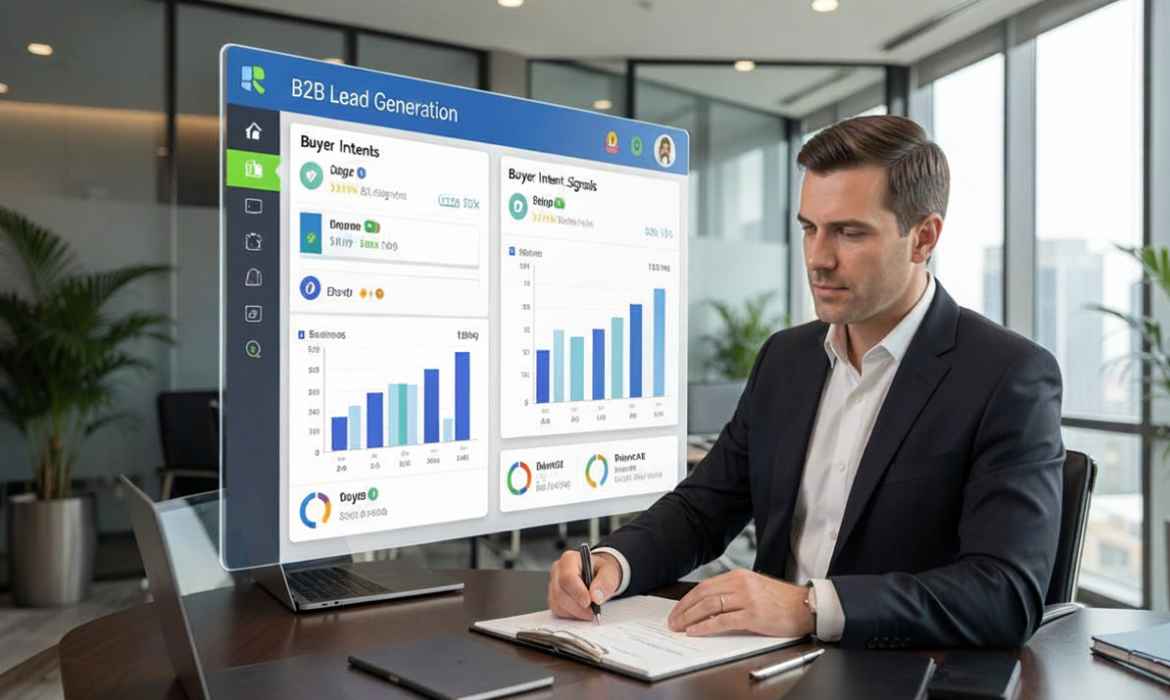
The Lead Generation Problem Has Changed
A B2B company can have thousands of contacts in its CRM and still struggle to find its next good customer.
The problem isn’t always a lack of prospects. In many cases, there are too many of them.
A sales representative may have a list containing hundreds of companies, but how many are actually relevant right now? Which businesses are growing? Which companies are investing in new technology? And more importantly, which accounts are actively looking for a solution similar to yours?
A static contact list can’t answer those questions.
This is where sales intelligence becomes valuable. Instead of giving marketing and sales teams more names to work with, sales intelligence provides context around those names. It helps teams understand what is happening inside a company, how a prospect is behaving, and whether there is a reason to start a conversation now.
For modern B2B lead generation, that difference matters. Finding contact information is relatively easy. Finding the right opportunity at the right time is much harder.
Sales Intelligence Is More Than a Bigger Database
It is tempting to think of sales intelligence as another source of contact information. However, a useful intelligence platform goes beyond names, job titles, email addresses, and company details.
The real value comes from combining different types of information to create a clearer picture of an account.
Consider a company that has been on your prospecting list for six months. On paper, nothing may appear to have changed. Then the company announces a major expansion, hires a new VP of Marketing, increases its technology investment, and starts researching solutions related to your service.
Those events create a very different sales opportunity.
The company didn’t suddenly become a better prospect because its name was added to a database. It became more relevant because something changed.
Sales intelligence helps identify these changes and brings them to the attention of the teams responsible for generating pipeline. Depending on the data available, this can include company information, leadership changes, hiring activity, technology usage, engagement behavior, intent signals, and other relevant business events.
The goal isn’t simply to collect more information. It’s to turn information into something a salesperson can act on.
From Static Contact Lists to Live Prospect Signals
Traditional prospecting often starts with a list.
A marketer defines an industry, company size, location, or job title and builds an audience around those criteria. This approach still has value, particularly when creating an initial target market. The problem appears when that list becomes the entire strategy.
B2B markets don’t stand still.
Companies hire new executives. Teams expand. Budgets change. Businesses enter new markets. Technologies are replaced. Competitors emerge. Priorities shift.
A prospect that wasn’t relevant three months ago may suddenly become an excellent opportunity.
This is why current signals are becoming increasingly important in B2B lead generation. Instead of asking only whether a company fits your target profile, sales teams can also ask what is happening inside that account right now.
For example, a company announcing a new regional expansion may need additional marketing support. A business hiring dozens of sales representatives may be preparing for aggressive growth. An organization replacing its existing technology stack may be entering a buying cycle.
None of these signals guarantees a purchase. They simply provide context that can help a sales team decide where to focus its attention.
The Moment Data Becomes Useful to Sales
Having data isn’t the same as knowing what to do with it.
This is one of the biggest challenges B2B teams face. Marketing may have access to website analytics, CRM records, campaign reports, and third-party data, while sales representatives receive spreadsheets or contact lists. Valuable information exists, but it isn’t always connected to the salesperson’s next action.
Sales intelligence can bridge that gap.
Suppose a sales representative is preparing to contact a technology company. Instead of sending a generic introduction, the representative can review relevant information about the account before reaching out. Perhaps the company recently expanded its sales team or entered a new market. That context can influence both the timing and message of the outreach.
The conversation becomes more relevant because it is based on something happening within the prospect’s business.
This doesn’t mean every sales message needs to mention every piece of available data. In fact, too much personalization can make outreach feel unnatural. The objective is to give salespeople enough context to understand why an account may be worth contacting and how to approach the conversation intelligently.
Where Sales Intelligence Fits Into the Lead Generation Funnel
Sales intelligence can influence almost every stage of the B2B lead generation process, starting before a prospect even becomes a lead.
At the targeting stage, intelligence helps marketers identify companies that match their Ideal Customer Profile. Instead of building broad audiences based only on industry and company size, teams can add additional signals that indicate potential relevance.
During prospecting, intelligence helps sales teams prioritize accounts and identify the right people within those organizations. This becomes particularly useful when several decision-makers influence a B2B purchase.
Qualification is another important stage. A prospect may fit your target profile but still have little reason to engage with your business. Intelligence can provide additional context around account activity and business changes, helping teams distinguish between a good company fit and a timely opportunity.
Then comes outreach.
This is where all the earlier information needs to translate into action. A salesperson can use relevant account insights to create a more informed approach rather than relying on generic messaging.
Finally, intelligence can support ongoing engagement. Not every prospect will be ready to buy after the first interaction. Keeping track of relevant changes allows teams to recognize when an account becomes more active or enters a new stage of its buying journey.
In other words, intelligence isn’t a single step in lead generation. It can support the entire process.
A Simple Example of Intelligence in Action
Consider a B2B company that provides demand generation services.
Its marketing team has identified 5,000 companies that match its basic target criteria. Without additional intelligence, the sales team might divide those accounts among representatives and begin outreach.
Now imagine adding current account signals.
Among those 5,000 companies, 400 have recently expanded their marketing teams. Another group has entered new markets, while some have announced aggressive revenue targets. A smaller group has also shown interest in content related to demand generation.
The list is still large, but the sales team’s priorities have changed.
Rather than treating all 5,000 accounts equally, representatives can start with companies showing stronger signs of relevance. They can research those accounts, identify appropriate decision-makers, and create outreach based on the prospect’s situation.
The technology hasn’t magically created demand.
It has helped the team recognize where existing demand may already be developing.
Sales Intelligence and Marketing-Sales Alignment
Marketing and sales often have access to different pieces of the same customer story.
Marketing may know which content an account engaged with. Sales may know what happened during the last conversation. Revenue operations may have information about account history, while a third-party platform may provide additional business signals.
When these insights remain disconnected, teams can miss important opportunities.
A shared intelligence approach gives marketing and sales a stronger foundation for collaboration. Marketing can use account signals to build more relevant campaigns, while sales can use the same information to prioritize follow-up.
This also changes the conversation around lead quality.
Instead of marketing saying, “We generated 500 leads,” and sales responding, “Most of them aren’t useful,” both teams can examine which accounts show the strongest combination of company fit, engagement, and buying signals.
That creates a much more meaningful definition of a qualified lead.
What Good Sales Intelligence Looks Like in Practice
Not all data is equally useful.
For B2B lead generation, accuracy is essential. Outdated job titles, incorrect company information, and old contact details can quickly undermine an otherwise strong prospecting strategy.
Freshness matters too. A leadership change from two years ago may have little relevance today. A new executive who joined last month could be far more important.
Context is equally valuable. Knowing that someone works at a company is basic information. Knowing that the company recently expanded, changed its technology stack, or entered a new market provides a reason to investigate further.
The best intelligence is therefore not necessarily the largest amount of data. It is the information that helps a marketing or sales professional make a better decision.
That distinction is important because B2B teams already have more data than they can reasonably process. What they need is useful intelligence that turns data into clear priorities.
Turning Sales Intelligence Into Pipeline
The ultimate purpose of sales intelligence isn’t to create impressive dashboards or larger prospect databases. It is to help B2B teams generate better conversations.
When the right account is identified, the right decision-maker is found, and relevant business context is available, outreach becomes more focused. That can improve the quality of conversations entering the sales process.
Over time, those conversations can become qualified opportunities and contribute to pipeline generation.
The strongest B2B lead generation programs therefore combine several elements. Accurate prospect data provides the foundation. Sales intelligence adds context. Intent signals help identify timing. Strong messaging creates engagement. Human sales expertise turns those conversations into relationships.
No single data point can replace that process.
What intelligence can do is help teams spend their time where the probability of success is higher.
Building a More Intelligent Approach to B2B Lead Generation
B2B lead generation has moved beyond simply finding companies and collecting contact details. Buyers have more information, sales cycles are often longer, and competition for attention is intense.
In that environment, knowing more about your prospects can create a meaningful advantage.
Sales intelligence gives marketing and sales teams a way to understand the businesses behind the contact records. It helps reveal changes, identify relevant signals, prioritize accounts, and create more informed conversations.
For organizations focused on pipeline rather than lead volume, that shift is particularly important.
The goal isn’t to contact more people.
The goal is to spend more time with the right people, at the right companies, when there is a meaningful reason to start a conversation.
Turn Sales Intelligence Into Qualified B2B Opportunities with Acceligize
Acceligize helps B2B organizations turn prospect data and market intelligence into meaningful conversations with the right decision-makers. Through targeted B2B lead generation, demand generation, account-based marketing, appointment setting, and intent-driven strategies, we help businesses identify relevant accounts and build stronger pipelines.
If your sales team is spending too much time searching through prospect lists and not enough time having valuable conversations, it may be time to rethink your approach.
Partner with Acceligize to put sales intelligence, accurate targeting, and strategic B2B lead generation to work for your pipeline.
What is sales intelligence in B2B?
Sales intelligence uses company, contact, behavioral, and buying data to help sales teams understand prospects, identify relevant opportunities, and make more informed outreach decisions.
How does sales intelligence improve B2B lead generation?
It helps teams identify better-fit prospects, understand account activity, find relevant decision-makers, and prioritize leads based on signals that indicate potential buying interest.
What data is used in sales intelligence?
Useful data can include firmographic details, contact information, company changes, website activity, intent signals, engagement history, and other information that helps sales teams evaluate potential accounts.
How can businesses measure the impact of sales intelligence?
Businesses can track qualified leads, meetings, opportunity creation, conversion rates, pipeline contribution, sales cycle progression, and revenue to evaluate whether intelligence improves sales outcomes.