

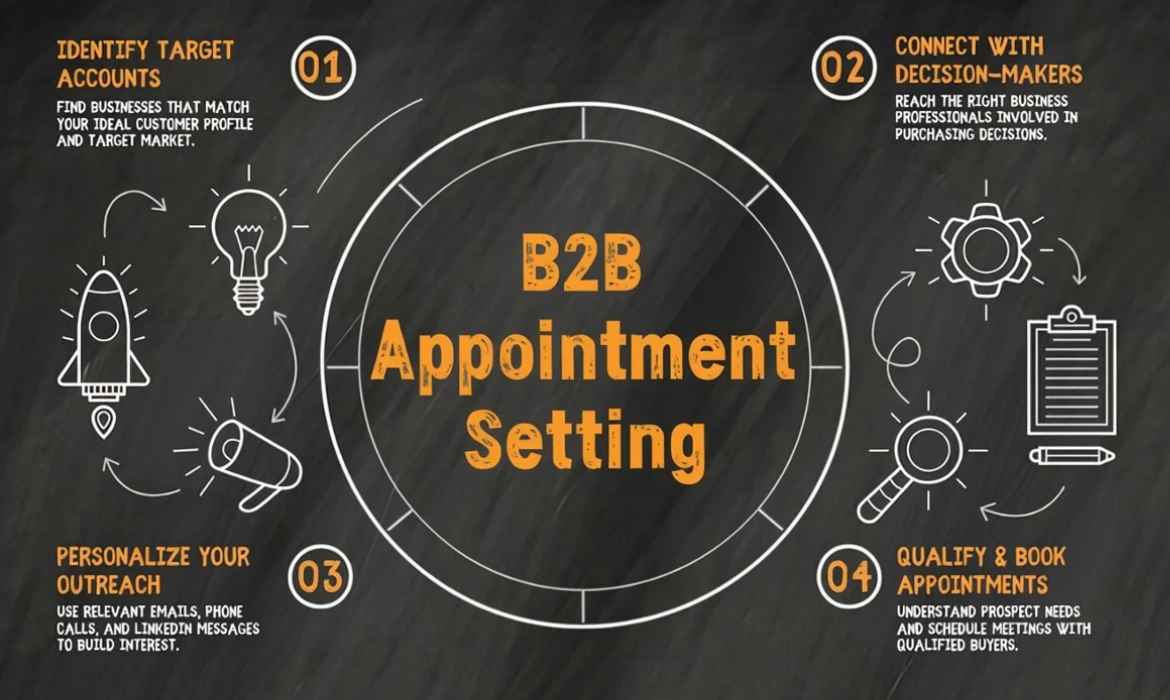
Getting a potential customer to show interest in your product is only the beginning of a B2B sales journey. Businesses must identify the right prospects, understand their challenges, start meaningful conversations, and move those conversations toward sales opportunities. However, turning cold prospects into interested buyers can be difficult, particularly when sales teams have limited time to reach the right decision-makers. This is where B2B appointment setting becomes an important part of the sales process.
Rather than approaching every prospect with the same pitch, appointment setting focuses on connecting with businesses that have a genuine possibility of becoming customers. It helps sales representatives spend more time speaking with relevant prospects and less time searching for opportunities. When supported by good targeting, personalized communication, and consistent follow-up, appointment setting can help businesses build a stronger sales pipeline and improve the quality of their sales conversations.
What Is B2B Appointment Setting?
B2B appointment setting is the process of identifying potential business buyers, contacting them through different outreach channels, understanding their needs, and scheduling meetings with sales representatives. These meetings give sales teams an opportunity to discuss solutions, explore business requirements, and determine whether a prospect is a suitable customer.
The process generally takes place before the main sales conversation. Appointment setters may contact prospects through email, phone calls, LinkedIn, or other communication channels to establish initial interest. Once a prospect shows enough interest and meets the required qualification criteria, the appointment setter arranges a meeting with the appropriate sales representative.
For example, a marketing technology company offering account-based marketing software may want to connect with marketing directors at mid-sized and enterprise organizations. Its appointment setting team identifies companies that match the ideal customer profile, contacts relevant decision-makers, and schedules product discussions with prospects who want to learn more.
The objective is not simply to fill a calendar. It is to create sales meetings with people who have relevant business needs and a reasonable chance of progressing through the sales funnel.
Why B2B Appointment Setting Matters
In B2B sales, purchasing decisions often involve multiple stakeholders, longer evaluation periods, and higher investments. Sales representatives cannot always rely on inbound inquiries to maintain a consistent pipeline. They need a structured way to reach potential buyers and introduce their solutions.
A well-planned appointment setting process helps businesses:
- Reach relevant decision-makers: Connect with professionals who influence or approve purchasing decisions instead of relying on generic contact lists.
- Improve sales productivity: Reduce the time sales representatives spend on prospecting and allow them to focus on discovery meetings and opportunities.
- Maintain a steady pipeline: Create a consistent flow of conversations with potential buyers instead of depending entirely on occasional inbound leads.
- Understand customer requirements: Use early conversations to identify challenges, priorities, budgets, and potential buying timelines.
- Improve conversion opportunities: Give sales teams a better starting point by scheduling meetings with prospects who have shown interest.
When businesses approach appointment setting with clear goals, they can make their outreach more relevant and build stronger relationships with potential customers from the first interaction.
How the B2B Appointment Setting Process Works
Successful appointment setting requires more than sending emails or making phone calls. Each stage should support the next, so prospects receive relevant communication and sales representatives get enough information before a meeting.
1. Define Your Ideal Customer Profile
Before beginning outreach, businesses need to decide which companies are most likely to benefit from their offerings. An ideal customer profile (ICP) helps identify organizations based on factors such as industry, company size, revenue, location, technology usage, and business challenges.
For instance, a cybersecurity company may focus on financial services organizations with 500 or more employees that are expanding their cloud infrastructure. This level of targeting gives appointment setters a clearer direction and helps them avoid contacting businesses that are unlikely to need the solution.
2. Identify Relevant Decision-Makers
After defining target accounts, the next step is to identify the people responsible for evaluating or purchasing the solution. Depending on the product, this may include department heads, procurement managers, IT leaders, marketing executives, or senior management.
A single company may have several people involved in a purchasing decision. Therefore, understanding their roles and responsibilities can help appointment setters tailor conversations to the interests of each stakeholder.
3. Initiate Personalized Outreach
Outreach should give prospects a reason to respond. Generic messages that focus only on product features often fail to capture attention because buyers receive similar communication from multiple vendors.
Instead, appointment setters should connect their message to a relevant business challenge, industry trend, operational requirement, or company initiative. A short, clear message that explains why the conversation may be useful is often more effective than a long sales pitch.
4. Qualify Prospects Before Scheduling
Not every interested prospect is ready for a sales meeting. Qualification helps appointment setters determine whether the prospect has a relevant requirement, whether the solution fits their business, and whether a conversation with sales would be worthwhile.
Qualification criteria may include company fit, business need, decision-making authority, budget availability, and purchase timeline. These factors do not always need to be confirmed during the first interaction. The objective is to gather enough information to schedule a productive meeting.
5. Schedule and Confirm the Appointment
Once the prospect agrees to a meeting, the appointment setter should confirm the date, time, participants, and meeting purpose. Sending a calendar invitation with a short agenda can help both sides prepare.
A confirmation email followed by a reminder before the meeting can also reduce missed appointments. If the prospect needs to reschedule, making the process simple helps preserve the opportunity.
Effective B2B Appointment Setting Strategies
The success of appointment setting depends on how well businesses approach their target audience. The following strategies can help sales and marketing teams create more relevant conversations.
Use a Multichannel Outreach Approach
Relying on one communication channel can limit the number of prospects a business reaches. Some decision-makers respond to emails, while others prefer phone conversations or LinkedIn interactions.
A multichannel approach allows appointment setters to engage prospects through different touchpoints without overwhelming them. For example, a sales representative might send an introductory email, connect on LinkedIn, and follow up with a phone call if the prospect has not responded.
Each interaction should provide context rather than repeat the same message. Consistency matters, but prospects should not feel that they are receiving automated communication without any consideration for their needs.
Personalize Messages Around Business Challenges
Personalization goes beyond adding a prospect’s name or company name to an email. Effective outreach demonstrates an understanding of the prospect’s role, business environment, or potential challenge.
For example, a company expanding into new markets may need better sales intelligence, stronger lead qualification, or improved access to decision-makers. Appointment setters can use these business signals to create more relevant messages and explain why a meeting may be valuable.
Follow Up With a Clear Purpose
Many prospects do not respond to the first outreach attempt, even when the solution is relevant. They may be busy, reviewing priorities, or simply miss the message. A thoughtful follow-up process can help bring the conversation back to their attention.
However, every follow-up should have a reason. Sales teams can share a useful insight, explain a relevant benefit, ask a simple question, or suggest a convenient time to connect. Repeatedly sending messages that only ask whether the prospect has seen the previous email can make outreach feel unproductive.
Align Sales and Marketing Teams
Appointment setting works better when marketing and sales teams agree on what makes a prospect suitable for a meeting. Marketing may generate leads through campaigns, content syndication, webinars, or paid advertising, while sales teams engage prospects directly.
If both teams use different qualification criteria, sales representatives may receive meetings with prospects who do not fit their requirements. Shared definitions, regular feedback, and clear handoff processes can improve lead quality and reduce friction between teams.
B2B Appointment Setting Metrics to Track
Tracking performance helps businesses understand whether their appointment setting activities are generating meaningful sales opportunities. The number of meetings booked alone does not provide a complete picture.
| Metric | What It Measures |
| Contact Rate | Percentage of prospects successfully reached by the outreach team |
| Appointment Booking Rate | Percentage of contacted prospects who agree to a meeting |
| Meeting Show Rate | Percentage of scheduled meetings that prospects actually attend |
| Qualification Rate | Percentage of booked meetings that meet the defined sales qualification criteria |
| Cost per Appointment | Total appointment setting cost divided by the number of appointments booked |
| Meeting-to-Opportunity Rate | Percentage of completed meetings that progress to qualified sales opportunities |
For example, a team may book 100 appointments in a month, but only 60 prospects attend and 15 meetings become qualified opportunities. Although the booking volume appears strong, the show rate and opportunity conversion rate indicate where the process needs improvement.
By reviewing these metrics together, sales managers can identify whether the problem lies in targeting, outreach messaging, qualification, appointment confirmation, or the sales conversation itself.
Common B2B Appointment Setting Challenges
Even with a well-defined process, appointment setters may face challenges that affect the quality and consistency of meetings.
Reaching decision-makers: Gatekeepers, outdated contact information, and crowded inboxes can make it difficult to connect with the right person. Better contact data and account research can improve targeting.
Low response rates: Prospects may ignore messages that feel generic or arrive at the wrong time. Relevant messaging and thoughtful follow-ups can help improve engagement.
Unqualified meetings: Appointments booked without understanding the prospect’s needs may waste sales representatives’ time. Clear qualification criteria can help prevent this problem.
Appointment cancellations and no-shows: Prospects may forget meetings or lose interest after booking. Calendar invitations, reminders, and a clear meeting agenda can help reduce missed appointments.
Limited visibility into performance: Without accurate reporting, businesses may struggle to identify which outreach campaigns or appointment setters are producing valuable opportunities. Consistent tracking and CRM updates help teams make better decisions.
Addressing these challenges requires regular review of the process instead of focusing only on the number of meetings scheduled.
How Technology Improves B2B Appointment Setting
Technology can simplify appointment setting by helping sales teams manage prospect information, automate repetitive tasks, and track communication across different channels.
Customer relationship management (CRM) platforms help teams organize contacts, maintain interaction histories, monitor appointments, and manage follow-ups. Sales engagement tools support email sequences, call tracking, and outreach scheduling, while data and intent platforms can help identify companies showing interest in relevant products or services.
Automation can also improve consistency. For instance, appointment confirmation emails, calendar invitations, and reminders can be triggered automatically after a meeting is booked. This reduces manual work and allows appointment setters to spend more time on prospect research and conversations.
However, technology should support the process rather than replace meaningful communication. Automated outreach still needs relevant targeting, accurate data, and messages that reflect the prospect’s business needs. Using automation without these elements may increase activity volume but fail to improve meeting quality.
Best Practices for Building a Successful Appointment Setting Program
Businesses looking to improve their appointment setting results should focus on the quality of the process, not just the number of calls or emails their teams complete.
- Set clear appointment goals based on sales pipeline requirements and realistic conversion expectations.
- Maintain accurate contact information and regularly review target account lists.
- Create outreach messaging for different industries, job roles, and business challenges.
- Use a consistent qualification framework to determine whether prospects are suitable for sales meetings.
- Keep CRM records updated with outreach activity, responses, appointment details, and prospect feedback.
- Review performance regularly and adjust targeting, messaging, and follow-up cadence based on results.
These practices help businesses build a repeatable appointment setting process that can adapt as their target audience, sales priorities, and market conditions change.
Turn More Conversations Into Sales Opportunities
A successful appointment setting program starts with understanding who your business needs to reach and why those prospects would be interested in a conversation. Accurate targeting, relevant outreach, timely follow-ups, and consistent qualification help sales teams move beyond meeting volume and focus on opportunities that have real potential.
For B2B organizations looking to expand their reach and connect with relevant business audiences, a structured approach to lead generation and prospect engagement can make a meaningful difference. Acceligize helps businesses strengthen their demand generation efforts through B2B lead generation solutions designed to connect brands with relevant audiences, support sales pipeline growth, and create opportunities for meaningful buyer engagement.
What is the difference between B2B appointment setting and lead generation?
Lead generation focuses on attracting and identifying potential customers who may be interested in a business’s products or services. Appointment setting takes the next step by contacting prospects, assessing their suitability, and arranging sales meetings. Both processes work together to support pipeline development.
Is B2B appointment setting suitable for small businesses?
Yes. Small businesses can use appointment setting to reach specific accounts, introduce their solutions, and build relationships with potential buyers. A focused outreach strategy allows smaller sales teams to prioritize relevant prospects instead of contacting large volumes of businesses without a clear direction.
How many follow-ups should appointment setters send?
There is no fixed number that works for every audience. The number and timing of follow-ups should depend on the prospect’s response, industry, outreach channel, and business context. A reasonable sequence with relevant messages is generally more effective than excessive contact attempts.
How can businesses improve appointment setting results?
Businesses can improve results by refining their ideal customer profile, using accurate prospect data, personalizing outreach, qualifying prospects consistently, and following up with a clear purpose. Reviewing appointment attendance and meeting-to-opportunity conversion rates can also help identify areas for improvement.