

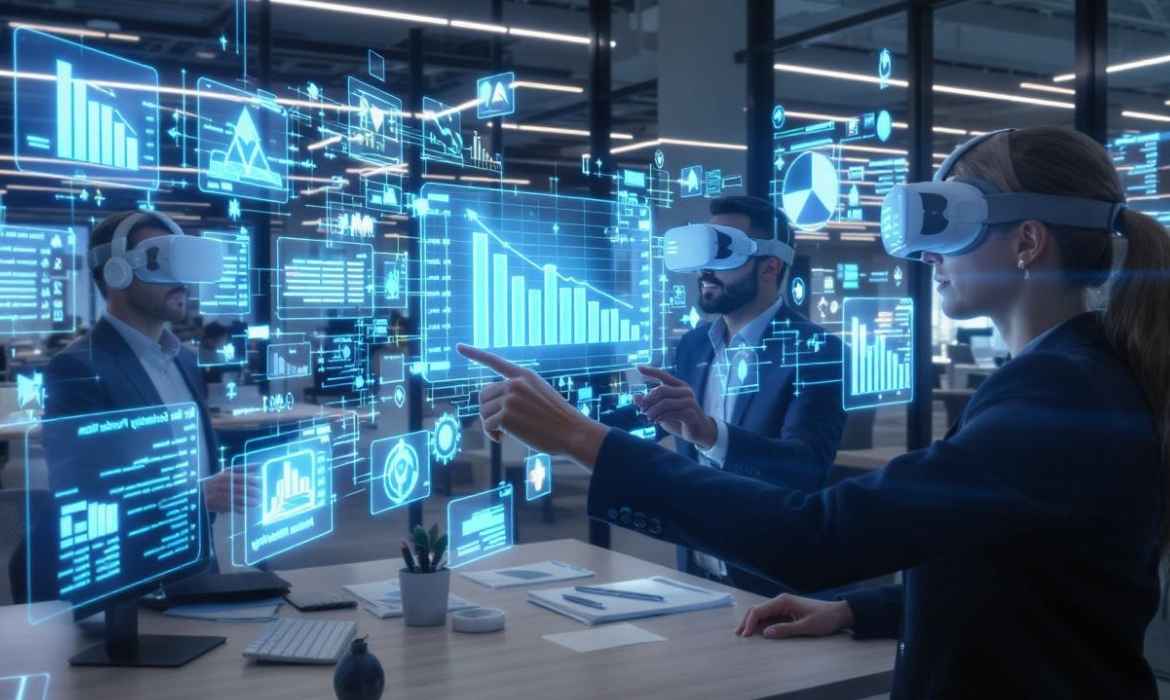
Technology continues to reshape the boundaries of marketing, and nowhere is this transformation more apparent than in the rise of Virtual Reality (VR) and Augmented Reality (AR). These immersive technologies are redefining how B2B brands connect, communicate, and convert their audiences. What once seemed futuristic is now becoming an essential part of modern marketing strategies bringing storytelling, product visualization, and engagement to life in ways that traditional media simply cannot match.
Virtual Reality (VR) creates simulated environments that immerse users in completely digital experiences. While Augmented Reality (AR) overlays digital information onto the real world. Together, they are revolutionizing B2B marketing by making complex products easier to understand, enhancing remote collaboration, and creating interactive customer experiences that build stronger brand relationships.
In an age where B2B decision-makers expect innovation and personalization. VR and AR are helping brands deliver both engaging clients emotionally and intellectually while positioning themselves as forward-thinking market leaders.
The Evolution of Immersive Technologies in B2B
In the early days, Virtual Reality (VR) and Augmented Reality (AR) were primarily seen as entertainment tools, powering gaming and interactive media. However, businesses soon realized their potential for marketing, training, and product demonstrations. The ability to visualize concepts, simulate real-world scenarios. Provide hands-on experiences remotely has made them invaluable in the B2B space.
Unlike traditional content formats, VR and AR enable prospects to experience solutions rather than just read about them. For B2B companies selling high-value or technically complex products. Such as manufacturing equipment, enterprise software, or engineering solutions immersive experiences eliminate the barriers between explanation and understanding.
As mobile devices, wearable tech, and 5G connectivity become mainstream, the accessibility of Virtual Reality (VR) and Augmented Reality (AR) marketing continues to expand. Businesses can now create virtual showrooms, AR-enhanced catalogs, or 3D walkthroughs that empower clients to interact with products before making a purchase decision.
Enhancing Product Demonstrations Through Immersive Experiences
In B2B marketing, product demonstrations are often the deciding factor in a buyer’s journey. Traditional demos, however, can be limited by location, logistics, or complexity. Virtual Reality eliminates these challenges by transporting prospects into a simulated environment where they can explore products and processes freely.
Imagine a potential client donning a VR headset to walk through a virtual data center or interact with a full-scale industrial machine without ever leaving their office. This immersive visualization not only makes technical details easier to grasp but also accelerates decision-making by replacing imagination with experience.
Meanwhile, Augmented Reality (AR) takes real-world interactions to the next level. By overlaying 3D models or data insights onto a user’s environment, AR allows clients to visualize how a product fits into their operations. For instance, a manufacturing company can use AR to show how a new piece of equipment integrates with an existing assembly line all through a smartphone or tablet screen.
Through these innovations, Virtual Reality (VR) and Augmented Reality (AR) are transforming demonstrations from static presentations into dynamic, interactive experiences that make complex information tangible.
Personalized B2B Customer Journeys with VR and AR
Today’s B2B buyers demand personalization, and immersive technologies make it possible to tailor marketing experiences like never before. With Virtual Reality (VR), marketers can design customized environments that cater to each client’s industry, pain points, and goals.
For example, an enterprise software company could create a VR experience that simulates specific business scenarios for different verticals showcasing how its solution improves workflows in finance, healthcare, or logistics. This personalized storytelling builds deeper engagement and emotional resonance, helping brands stand out in competitive markets.
Augmented Reality (AR) adds another dimension to personalization by enabling real-time customization. Clients can modify configurations, change design elements, or preview multiple product options on-screen before making decisions. This not only saves time but also enhances buyer confidence by providing clarity and control.
In the world of B2B marketing, personalization through VR and AR isn’t just about visual appeal it’s about creating relevance and value at every stage of the buyer journey.
Transforming Trade Shows and Virtual Events
Trade shows have always been vital to B2B marketing, offering opportunities to showcase innovation and build relationships. However, travel restrictions and digital transformation have shifted much of this activity online. Enter Virtual Reality (VR) and Augmented Reality (AR) redefining how businesses present themselves at virtual and hybrid events.
With VR, companies can host fully immersive trade show booths where attendees explore 3D product demos, watch presentations, or interact with sales teams in real time. These environments replicate the engagement of physical exhibitions while expanding accessibility to global audiences.
Augmented Reality (AR), on the other hand, enhances live events by blending digital layers with physical displays. Attendees can scan QR codes or use AR-enabled devices to view product specifications, watch animations, or access interactive tutorials all without physical contact.
This hybrid event model not only drives stronger engagement but also extends brand visibility long after the event ends. By integrating VR and AR, B2B marketers can deliver unforgettable experiences that bridge the gap between virtual interaction and real-world connection.
Building Trust and Emotional Engagement
One of the biggest challenges in B2B marketing is building trust. Decision-makers often rely on credibility, transparency, and emotional assurance before making investments. Virtual Reality (VR) and Augmented Reality (AR) help foster this trust by offering hands-on experiences that demonstrate product value authentically.
When clients can explore solutions interactively walking through virtual factories, testing machinery, or previewing software interfaces they gain confidence in their decisions. This level of engagement fosters a deeper connection between brand and buyer, turning abstract concepts into memorable experiences.
Moreover, immersive storytelling through VR and AR evokes emotions that static content cannot replicate. By appealing to both logic and empathy, marketers can humanize technology, making their brand message more impactful and trustworthy.
Data-Driven Insights from Immersive Marketing
Beyond creativity, Virtual Reality (VR) and Augmented Reality (AR) also offer powerful data capabilities that enhance marketing intelligence. Each interaction within these environments generates valuable insights from time spent on a specific product feature to engagement levels during simulations.
These behavioral metrics help B2B marketers understand customer intent, refine campaigns, and optimize future experiences. For example, if analytics show that prospects spend more time exploring a certain product area in VR, marketers can prioritize that offering in subsequent outreach.
The fusion of immersive technology and data-driven strategy enables marketers to measure emotional engagement as effectively as technical performance. This feedback loop transforms VR and AR from creative tools into measurable ROI-driven assets in the B2B marketing ecosystem.
Training, Collaboration, and Remote Selling
The potential of Virtual Reality (VR) and Augmented Reality (AR) in B2B marketing extends beyond customer engagement it’s reshaping internal operations as well. Companies now use immersive technologies to train sales teams, educate partners, and support remote collaboration.
VR-based training simulations allow employees to practice complex tasks in risk-free virtual environments, while AR-assisted learning offers real-time guidance during live operations. These methods increase efficiency, reduce costs, and ensure consistency across teams.
In remote selling, AR and VR are becoming indispensable. Sales representatives can host virtual product demos, guide clients through interactive catalogs, and collaborate seamlessly across distances all while maintaining the personal touch that B2B relationships depend on.
As the workforce becomes increasingly distributed, immersive communication tools will become central to maintaining engagement and productivity in B2B ecosystems.
The Future of B2B Marketing with VR and AR
The integration of Virtual Reality (VR) and Augmented Reality (AR) into B2B marketing is not a passing trend. It’s the foundation of a more interactive, data-driven, and human-centric future. These technologies empower brands to transform how they present value, engage clients, and tell their stories.
By merging creativity with functionality, immersive technologies allow businesses to demonstrate innovation not just in what they sell, but in how they sell it. The ability to blend virtual and real-world experiences gives marketers an unprecedented edge in building trust, improving customer understanding, and accelerating sales cycles.
As adoption grows and hardware becomes more accessible, Virtual Reality (VR) and Augmented Reality (AR) will become essential components of every successful B2B marketing strategy driving engagement beyond screens and into experiences that truly connect.
Ready to explore how Virtual Reality and Augmented Reality can elevate your B2B marketing strategy?
Partner with experts who blend technology with creativity to build immersive marketing experiences. Acceligize helps businesses harness VR and AR to engage clients, boost conversions, and lead in the digital age.
What is VR and AR in B2B marketing?
VR and AR are immersive technologies that help B2B brands create interactive product demonstrations, personalized experiences, virtual events, and engaging customer journeys.
How can VR and AR improve B2B marketing?
VR and AR can make complex products easier to understand, improve customer engagement, support personalized experiences, and help buyers evaluate solutions before making decisions.
How can businesses use VR and AR for product demonstrations?
Businesses can use VR for virtual product walkthroughs and simulations, while AR can overlay 3D models, product information, or configurations onto a buyer’s real-world environment.
How can B2B marketers measure the impact of VR and AR?
Marketers can track engagement time, interactions with product features, event participation, buyer behavior, conversions, and other performance data to evaluate the impact of immersive experiences.